Artists broke from tradition to explore abstraction, emotion, and experimentation, responding to industrialization, revolution, and modern life.
c. 1886–1905
Post-Impressionist artists sought deeper expression and structure. Color and form were used symbolically. Individual styles varied widely. The movement paved the way for modern art.
Paul Cezanne
1905–1906
Solid, sculptural nudes set in nature, balancing structure and sensation.
Paul Signac
1892
Bright, mosaic-like color patches depict everyday life by the sea.
Vincent Van Gogh
1889
Intense brushwork and color show the artist’s searching gaze and restless mind.
Henri De Toulouse Lautrec
1890
Bright posters and dancers whirl through Montmartre nightlife in bold outlines.
Georges Pierre Seurat
1884–1886
Pointillist dots build a calm Paris park scene shimmering with light.
1888
Studio figures rendered in delicate dots, studying light and surface.
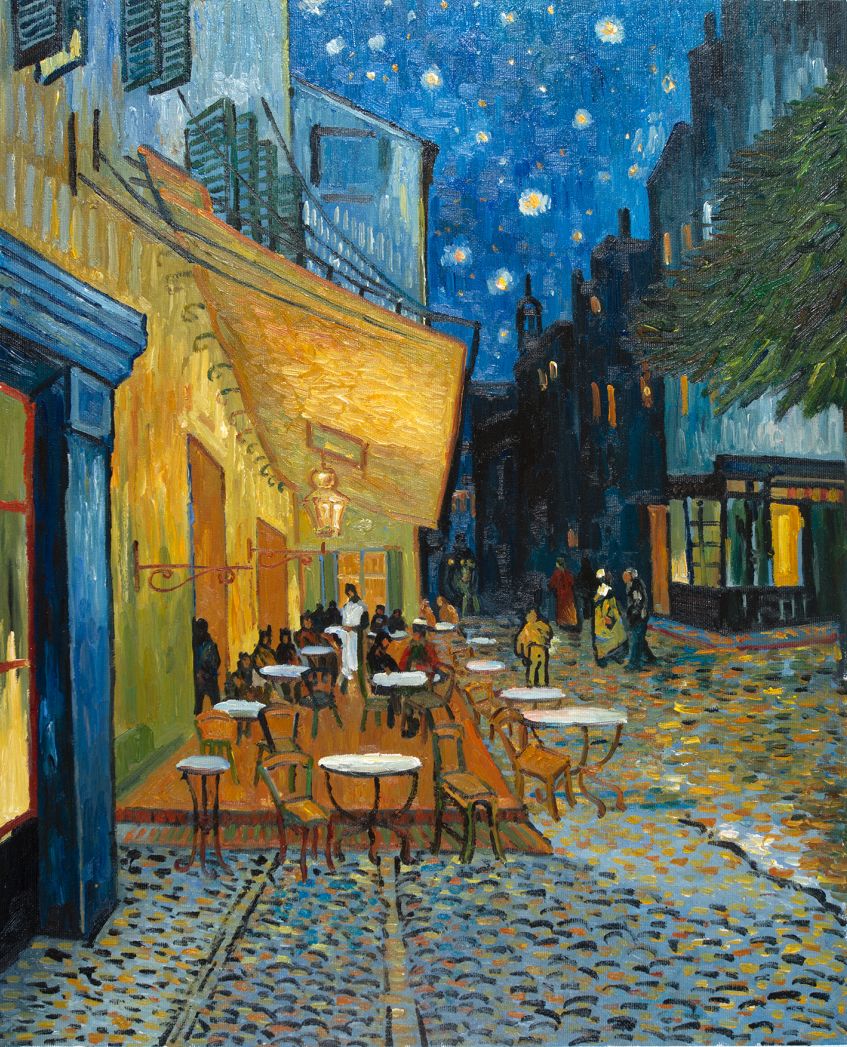
A glowing café under a starry sky, painted with thick, vibrant strokes.
c. 1887
Interlocking planes of mountain and tree anticipate modern abstraction.
Theo Van Rysselberghe
A luminous Neo-Impressionist portrait built from tiny, vibrating touches.
Paul Gauguin
1887
A lush, saturated view of tropical foliage pointing to his search for the “primitive.”