Art & Architecture
Non-commercial educational site
Western Art
Asian Art
Ancestral Art
Courses
Western Art
Asian Art
Ancestral Art
Modern

Artists broke from tradition to explore abstraction, emotion, and experimentation, responding to industrialization, revolution, and modern life.

Realism, Precisionism And Regionalism
Surrealism
Mexican Art
Neue Sachlichkeit
Bauhaus
De Stijl
Suprematism And Constructivism
Dada
Modernist Sculpture
Ecole De Paris
Primitivism
Futurism, Orphism And Rayonism
Cubism
German Expressionism
Fauvism
Photography Comes Of Age
Secessionism
Art Nouveau
Post Impressionism
Symbolism And Synthetism
Age Of Impressionism
Aestheticism
Pre-Raphaelite Art
Realism
Orientalism
French Academic Art

German Expressionism

c. 1905–1925

German Expressionism emphasized emotional intensity and psychological depth. Artists used distortion and bold color to convey inner experience. The movement reflected social tension and anxiety. It influenced later modern art and cinema.

Two Women in the Street

Karl Schmidt Rottluff

1913–1914

Blocky, mask-like faces stride forward, city life seen through Expressionist eyes.

Two Men at a Table

Erich Heckel

1912

Stark figures sit tensely, revealing inner unease through jagged forms.

Self-Portrait

Karl Schmidt Rottluff

1914

A raw, angular face carved in paint, emblematic of Expressionist intensity.

Fate of the Animals

Franz Marc

1913

Fragmented animals in violent color warn of chaos and war.

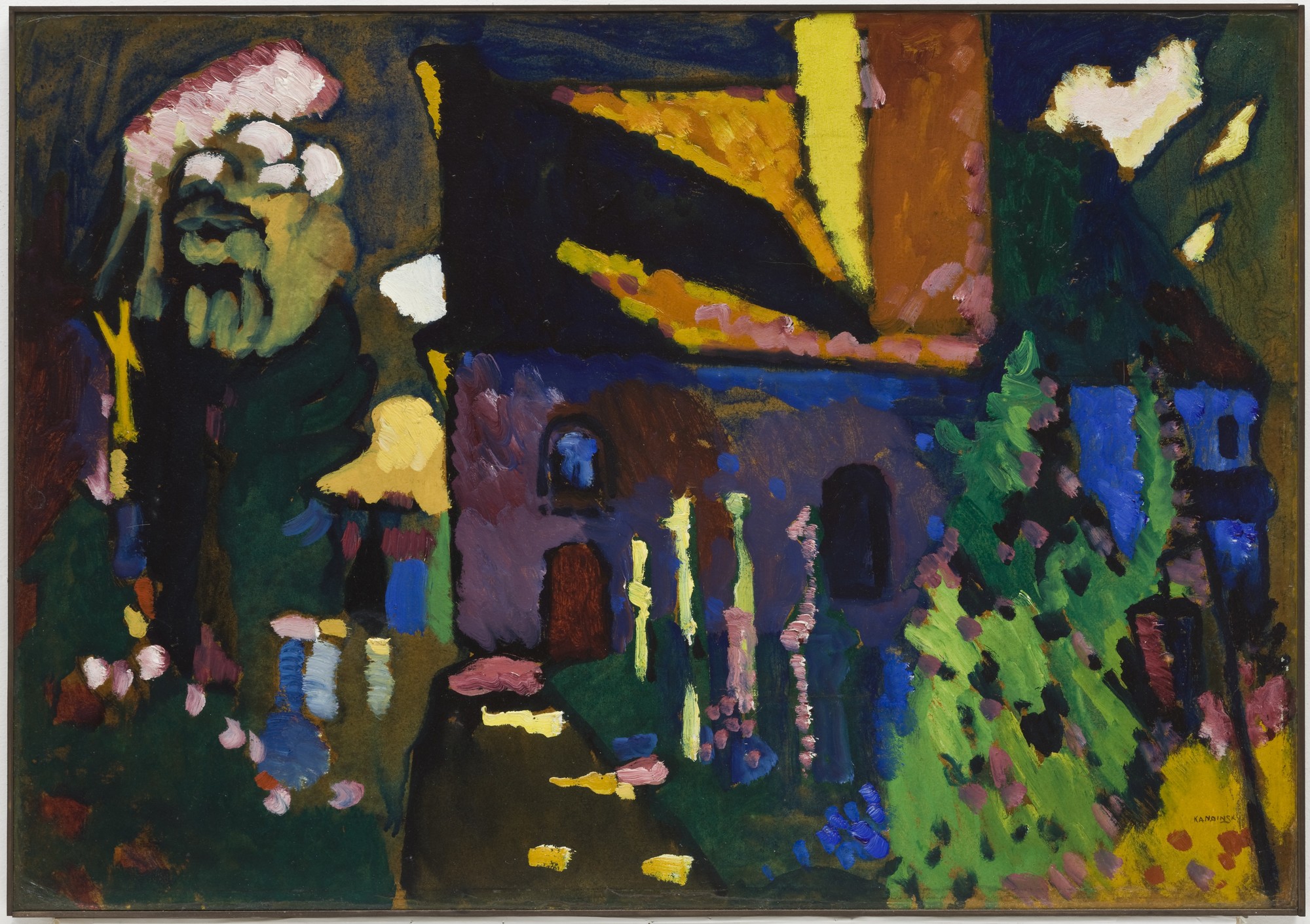
Church at Murnau

Wassily Kandinsky

1909–1910

A Bavarian church simplified into bold, expressive color shapes.

Horse in a Landscape

Franz Marc

1910

A blue horse stands in a stylized, spiritual landscape of pure color.

Improvisation III

Wassily Kandinsky

1909

Abstract swirls and bursts of color aim for a musical, inner expression.

Western Art
AD 1950-present
AD 1800-1950
AD 1400-1800
3000 BC - A.D. 1400
Asian Art
AD 1950-present
AD 1800-1950
AD 1400-1800
3000 BC - AD 1400
Ancestral Art
AD 1900-present
AD 1800-1900
AD 1400-1800
40000 BC - AD 1400