Marked by the Renaissance and Baroque, this era revived classical ideals while celebrating humanism, proportion, realism, and dramatic expression.
c. 1450–1550
The Northern Renaissance developed alongside the Italian Renaissance. Artists focused on realism, symbolism, and surface detail. Oil painting allowed for precision and texture. Religious themes remained central.
Pieter Bruegel The Elder
1565
A winter landscape filled with hunters and villagers, combining natural beauty with daily life.
Hans Holbein The Younger
1533
A double portrait rich in symbolism, famous for its anamorphic skull.
Pieter Aertsen
1551
A market scene combining everyday detail with religious subject matter hidden in the background.
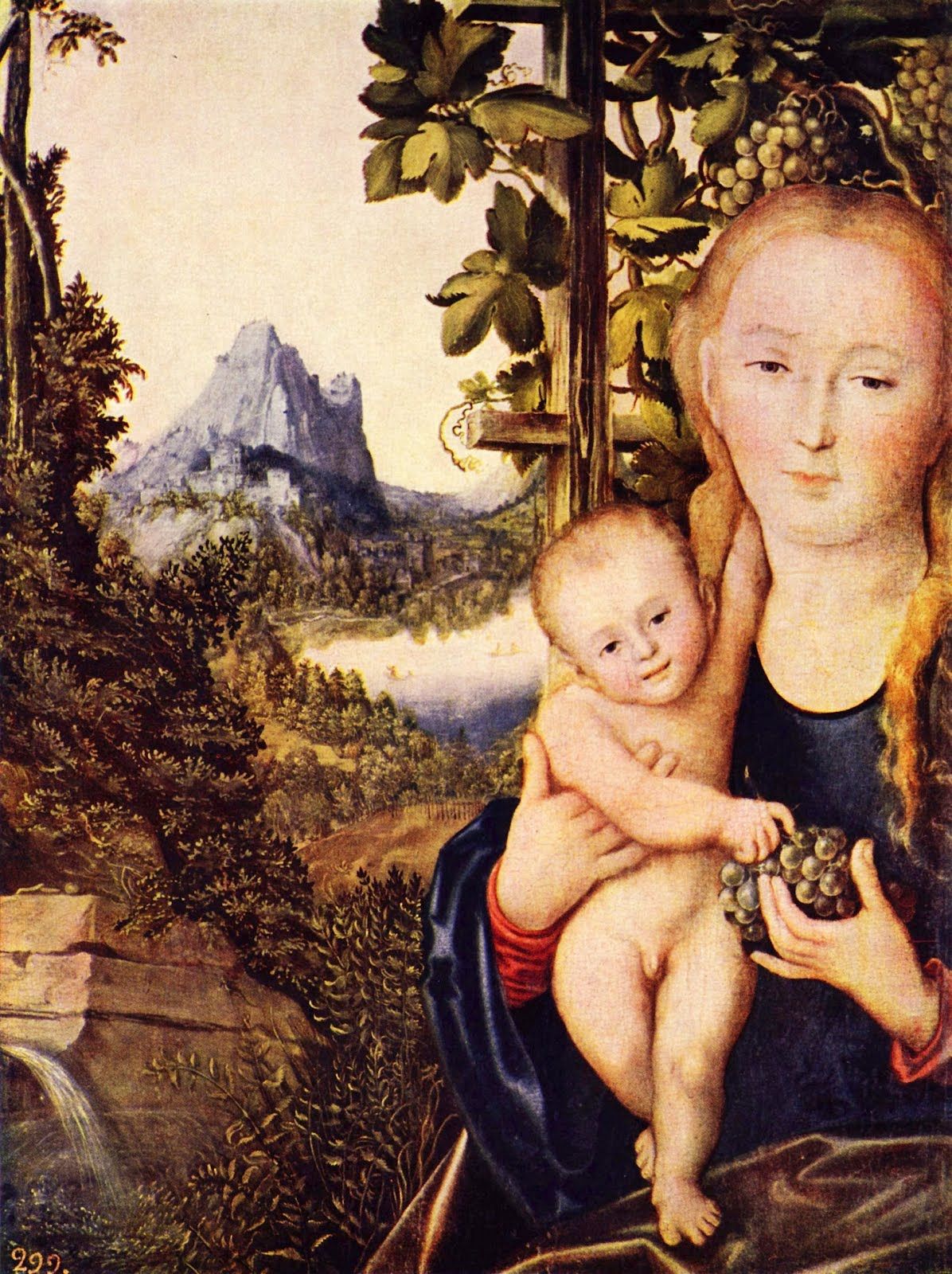
Lucas Cranach The Elder
c. 1520–1525
A Protestant-influenced depiction of the Virgin and Child, with delicate detail and human warmth.
Joachim Patinir
c. 1515–1519
A panoramic landscape with the saint in the foreground, blending devotional theme and vast scenery.
Matthias Grunewald
1512–1516
A vivid and expressive panel showing the angel Gabriel greeting Mary, full of emotion.
Hieronymus Bosch
c. 1490–1505
A triptych showing paradise, earthly pleasures, and hell, filled with fantastical imagery.
Albrecht Durer
1498
A dramatic woodcut of the biblical horsemen, symbolizing conquest, war, famine, and death.