Marked by the Renaissance and Baroque, this era revived classical ideals while celebrating humanism, proportion, realism, and dramatic expression.
c. 1520–1600
Mannerism emphasized elegance, artifice, and exaggeration. Figures appear elongated and compositions unstable. Artists deliberately departed from classical harmony. The style reflects uncertainty and intellectual complexity.
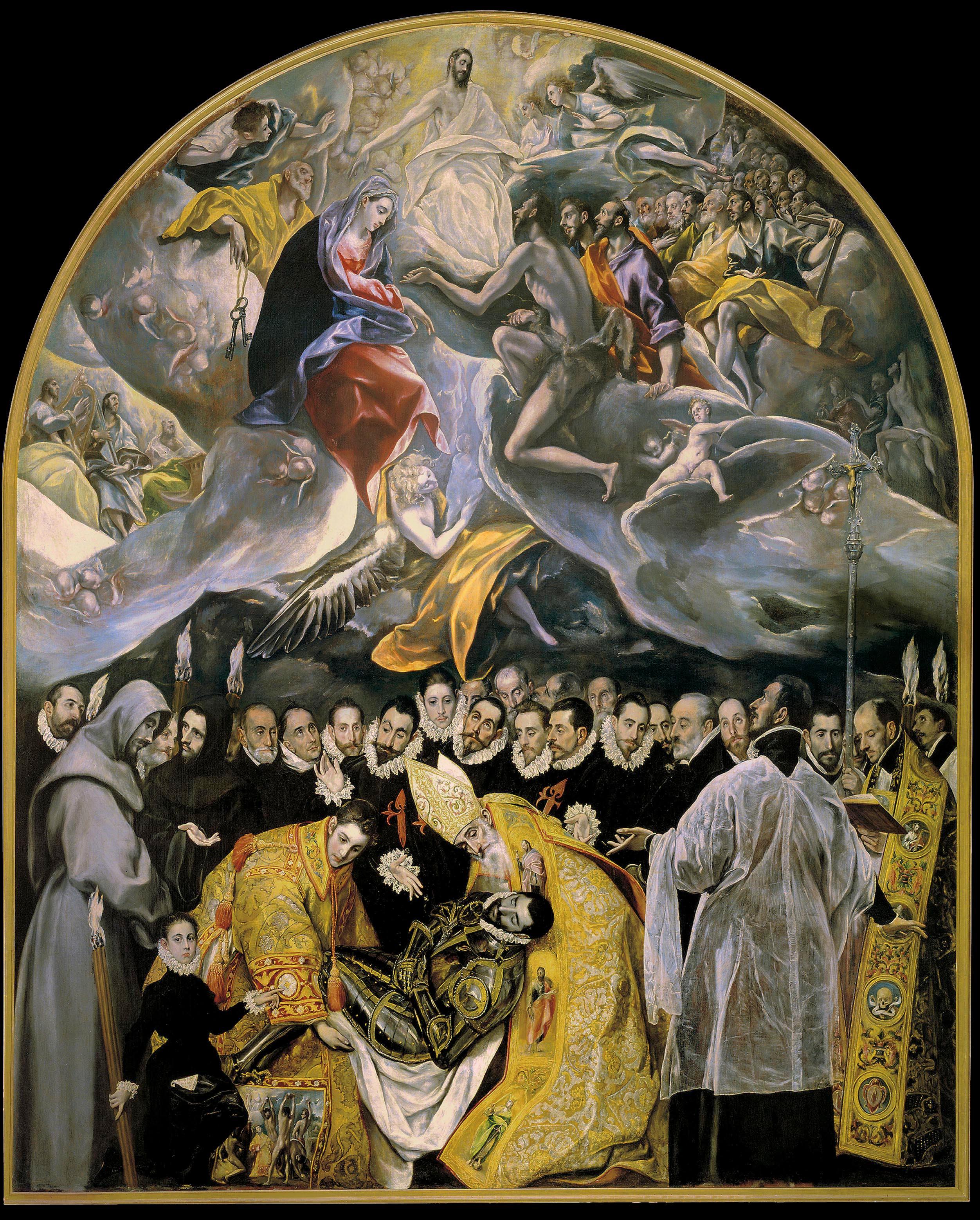
El Greco
1610–1614
A dramatic reinterpretation of the ancient Laocoön myth, painted with El Greco’s expressive style.
1586–1588
A monumental painting combining heaven and earth, blending realism with visionary style.
Agnolo Bronzino
c. 1545
A Mannerist painting full of complex symbolism, showing Venus and Cupid in an enigmatic embrace.
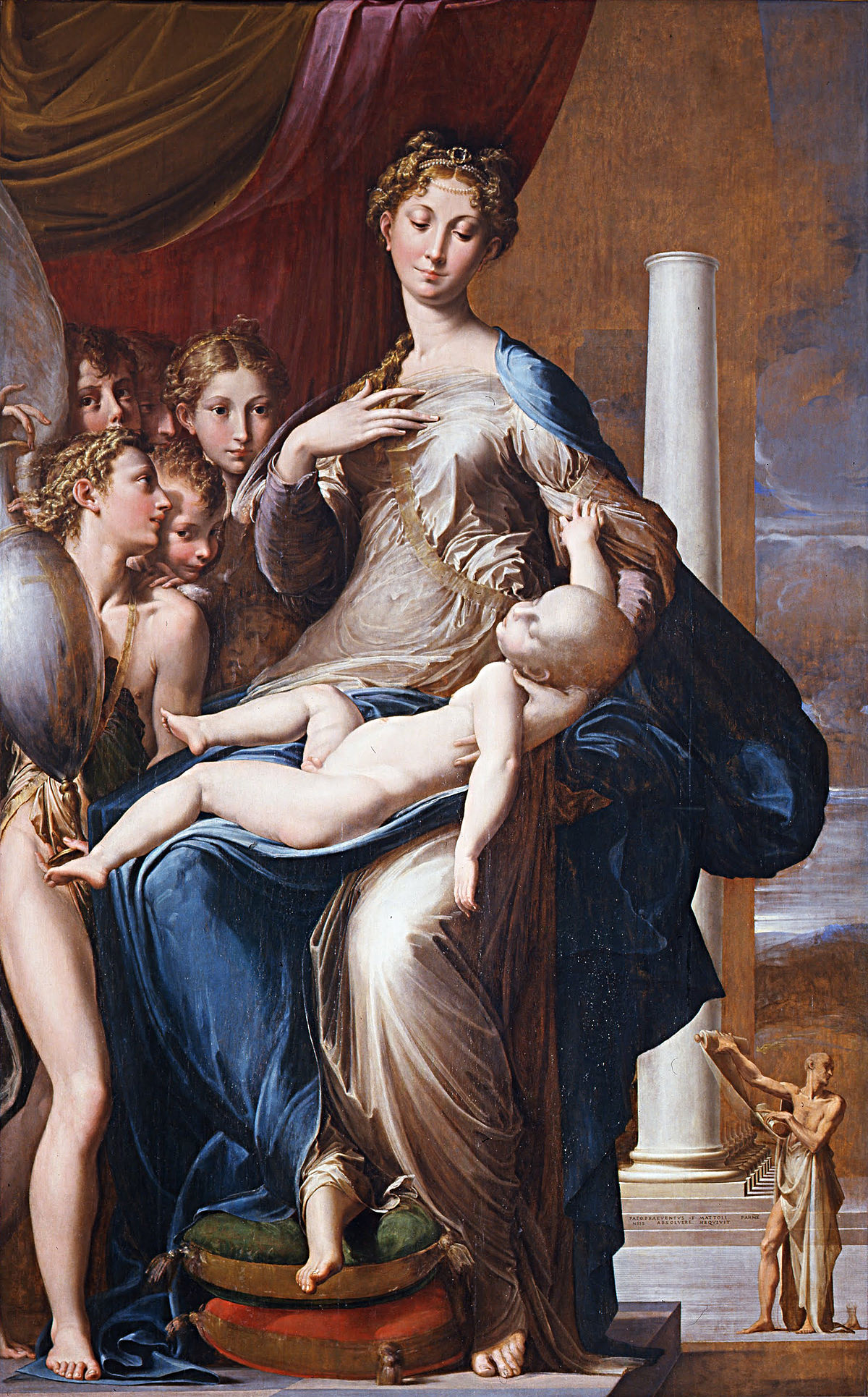
Parmigianino
1534–1540
A Mannerist painting of the Virgin and Child with exaggerated proportions and elegance.
Baldassare Peruzzi
Begun 1532
A Renaissance palace in Rome with a distinctive curved façade following the street’s line.
Giulio Romano
1524–1534
A palace in Mantua decorated with illusionistic frescoes, blending classical themes with playful distortion.
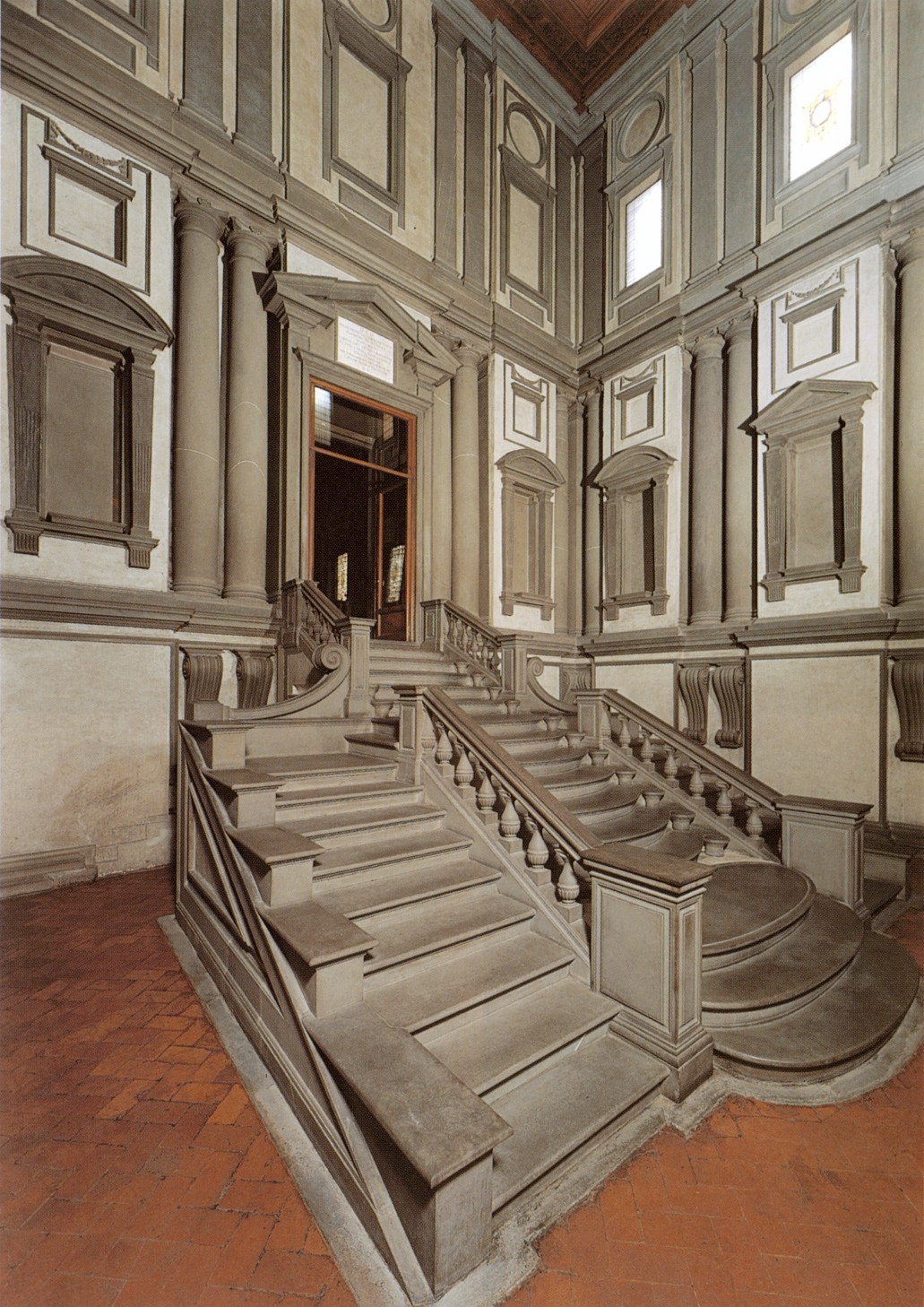
Michelangelo
1524–1559
An innovative vestibule with dynamic stair design, showing Michelangelo’s architectural boldness.
Pontormo
1525–1528
A swirling Mannerist altarpiece showing Christ’s body being lowered with emotional intensity.