Mannerism: A Stylized Shift from the High Renaissance
Mannerism, emerging in the early 16th century after the High Renaissance, represents a deliberate departure from classical harmony, balance, and naturalism. Coined from the Italian word maniera (meaning "style" or "manner"), Mannerism was not just a stylistic evolution but also a reflection of changing artistic ideals, intellectual uncertainty, and increasing political and religious complexity in Europe.
Key Characteristics and Origins
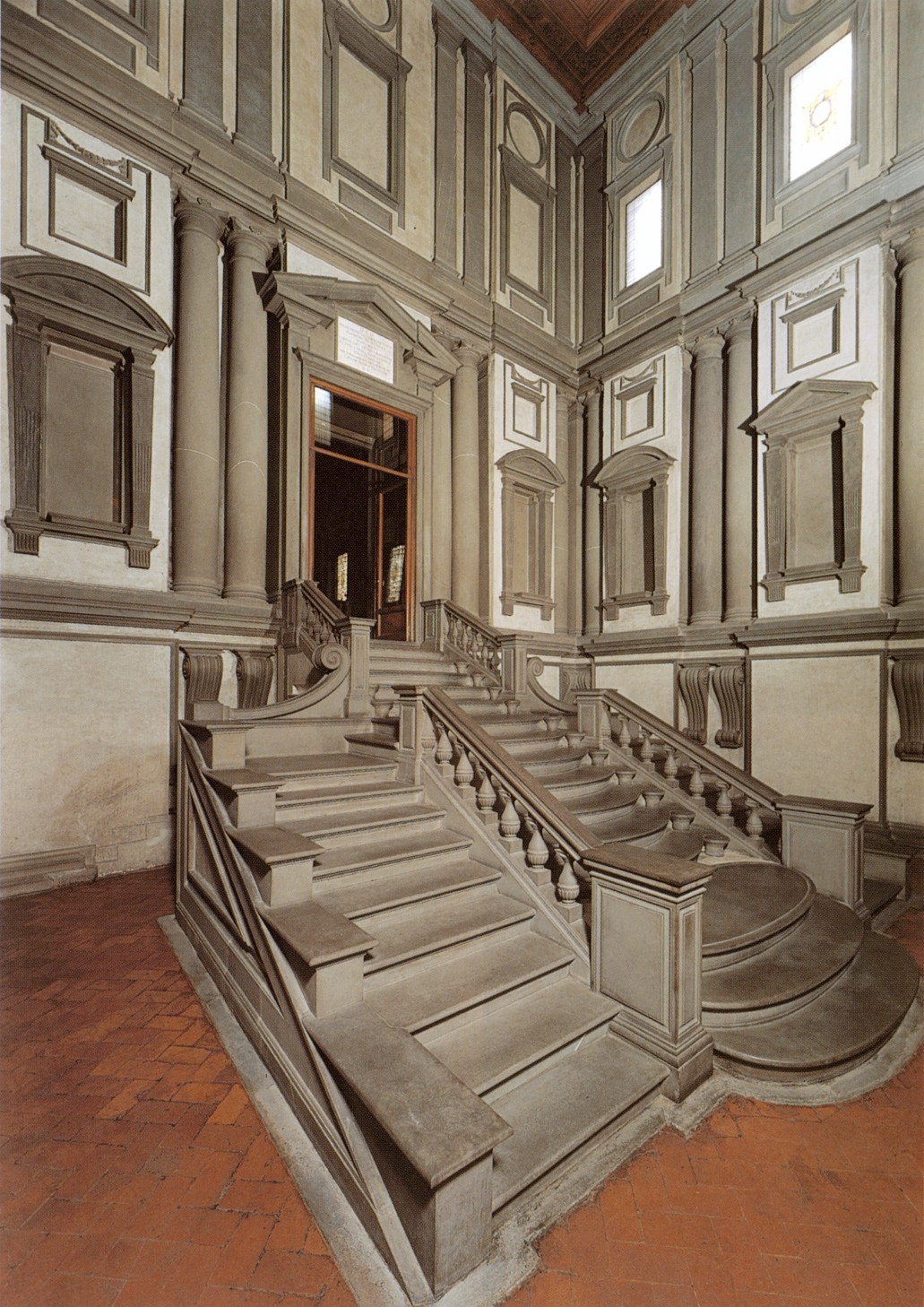
According to Giorgio Vasari, 16th-century Italian art surpassed that of the 15th century. Mannerist artists pushed Renaissance ideals to their extremes, prioritizing elegance, distortion, artificiality, and emotional intensity. Architects like Baldassare Peruzzi and Michelangelo started to break the rigid symmetry of classical architecture. Peruzzi’s Palazzo Massimo alle Colonne in Rome rejected the strict facade hierarchy of earlier Renaissance buildings, while Michelangelo's Laurentian Library Vestibule exaggerated spatial tensions with unsupported columns and distorted staircases, defying structural expectations.
In painting and sculpture, Mannerism embraced elongated human figures, unsettling poses, ambiguous space, and vibrant, often jarring color palettes. The style emphasized emotion, theatricality, and complexity over clarity and balance.
Key Artists and Works
Pontormo’s Deposition from the Cross (1525–1528) exemplifies the Mannerist turn. Figures appear weightless, suspended in a compressed space, with unnatural body twists and intense emotion, especially in the Virgin Mary’s expression. The bold use of pinks, blues, and oranges contrasts sharply with traditional religious solemnity.
Bronzino, a student of Pontormo, pushed allegorical sophistication in An Allegory of Cupid with Venus (1540–1550). This dense painting teems with eroticism and symbolic figures like Fraud, Jealousy, and Oblivion. It’s both sensual and intellectual, serving as a gift and conversation piece in the Medici court.
El Greco, though trained in Italy, brought the Mannerist aesthetic to Spain. His Burial of the Count of Orgaz (1586–1588) fuses Byzantine iconography with Catholic spirituality. It features exaggerated verticality, elongated figures, and a celestial light, capturing the spiritual fervor of the Counter-Reformation.
Giambologna’s sculpture Rape of a Sabine Woman (1582) reveals the dynamic, spiraling movement and anatomical exaggeration of the Mannerist form. Designed to be viewed from all angles, it rejects classical restraint in favor of expressive motion and complexity.
Mannerist Architecture
In architecture, Mannerism is marked by playful distortions of classical grammar. Giulio Romano’s Palazzo del Te (1534) in Mantua embodies this shift. The building’s inner courtyard features exaggerated rustication, broken pediments, irregular spacing, and intentionally clumsy proportions. The architecture becomes a visual joke, a parody of classical precision. The Room of the Giants further showcases Romano’s irreverence, enveloping visitors in a dramatic fresco cycle of collapsing architecture and divine wrath.
Mannerist architects such as Sebastiano Serlio and Jacopo Sansovino helped codify architectural experimentation through published treatises, while others, like Romano, used architecture as a narrative and expressive tool.