Indo-Islamic Art and Architecture
Indo-Islamic architecture developed with the expansion of Islam into the Indian subcontinent, beginning with the Umayyad conquest of Sindh in 636 CE. This early phase laid the foundations for a unique artistic and architectural tradition that would evolve over centuries, shaped by successive Muslim dynasties including the Ghaznavids, Delhi Sultanate, and Mughals. The fusion of Islamic religious concepts with the diverse cultural and architectural heritage of India produced a distinct Indo-Islamic identity.
Cultural and Religious Context
Islam’s spread into a predominantly polytheistic and diverse cultural landscape brought about a shift toward a monotheistic worldview, emphasizing abstract religious principles. Architecture became a vital expression of this transformation, particularly through the mosque as a place of worship and communal identity. Religious observances such as daily prayers and the orientation toward Mecca (the qibla) influenced architectural planning, introducing elements such as mihrabs and minarets.
Key Monuments and Dynasties
The early Indo-Islamic architectural heritage includes monumental structures such as:
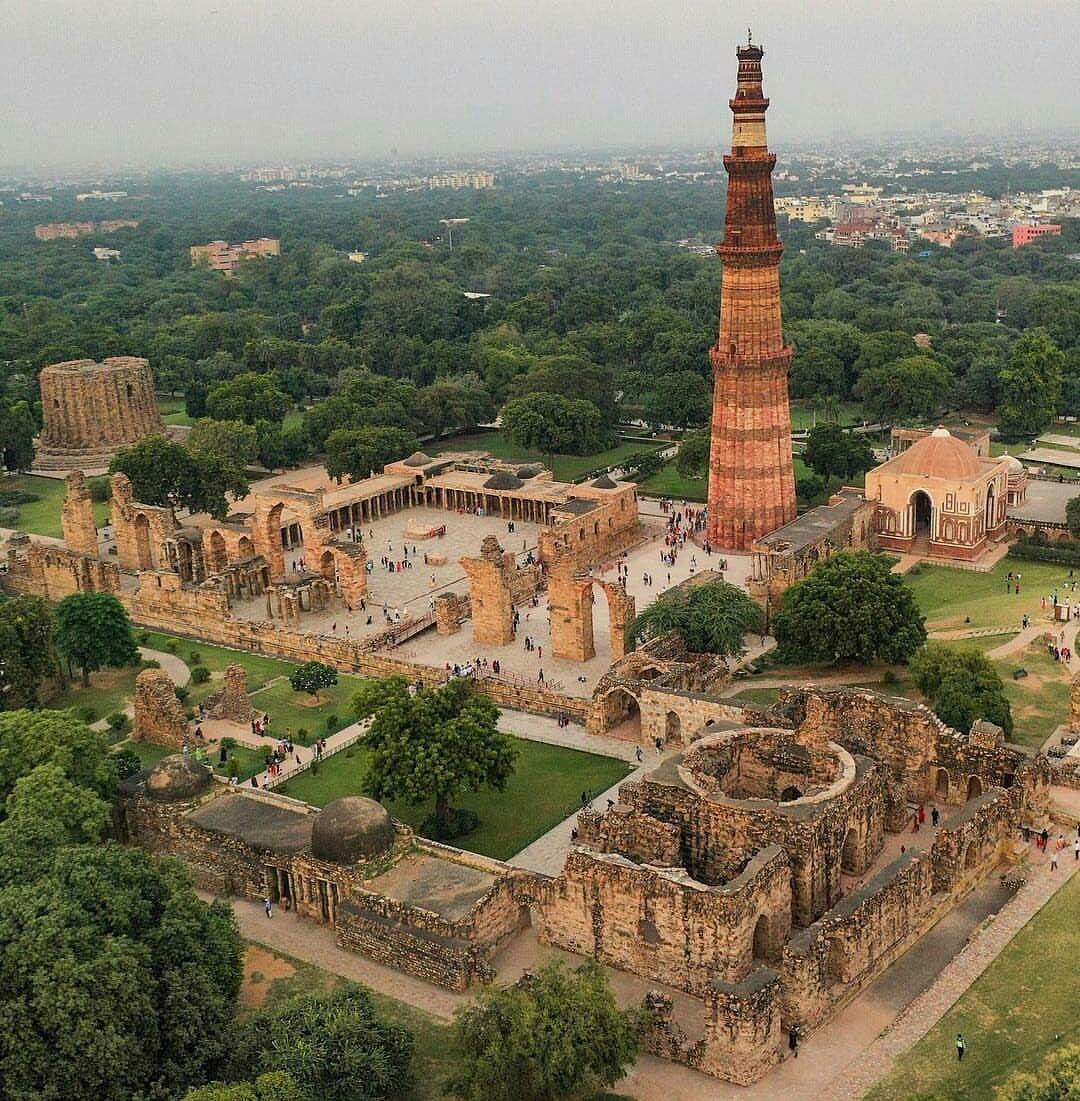
Qutb Minar (Delhi, initiated in 1192 by Qutb al-Din Aibak): A towering minaret that symbolized the triumph of Islam and showcased the reuse of spolia (materials from pre-Islamic structures) with Islamic design motifs.
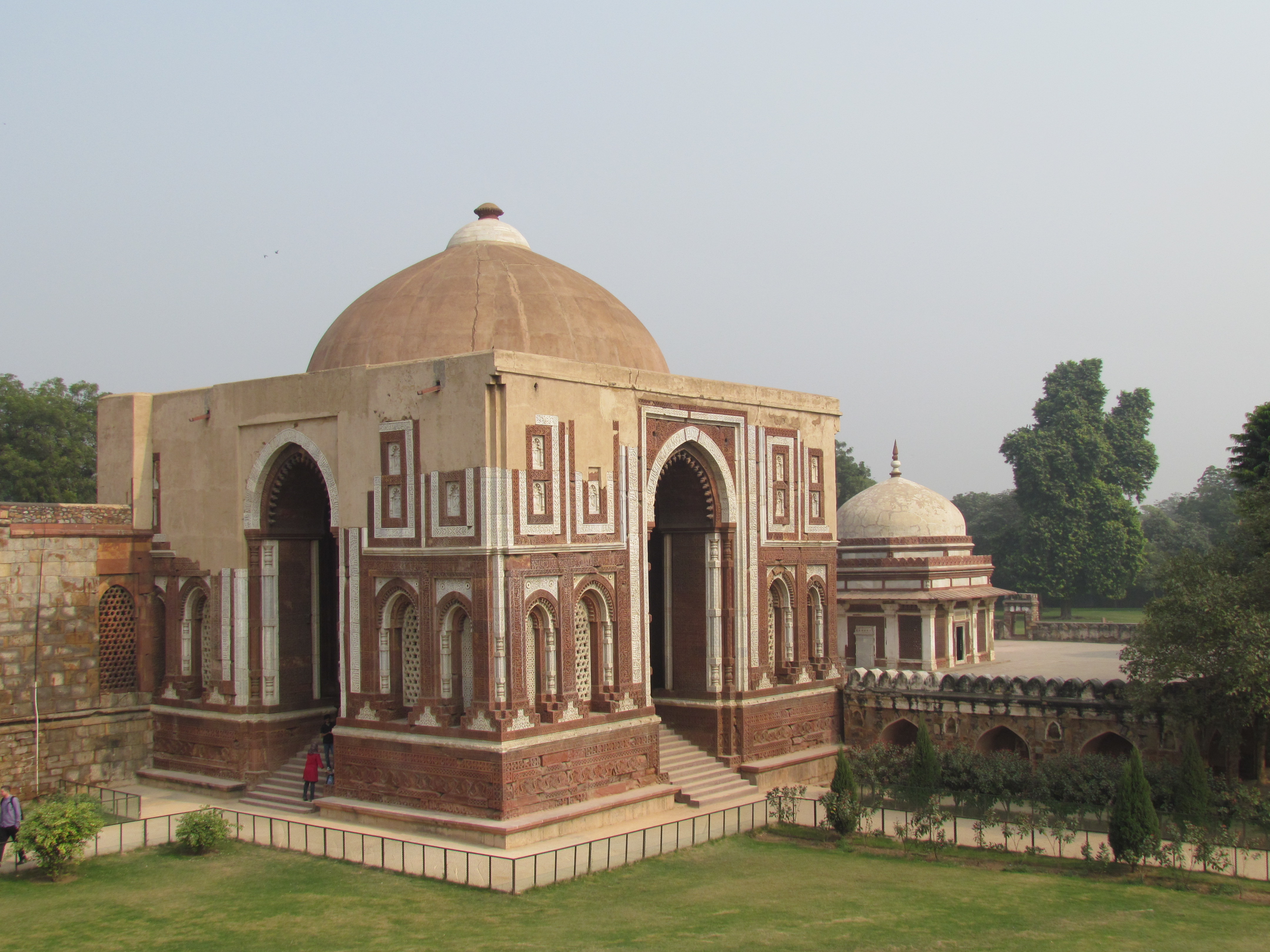
Ala’i Darwaza (1311): A monumental gateway built during the Khalji dynasty, noted for its use of true arches, intricate geometric decoration, and Arabic calligraphy.
These buildings marked a departure from earlier Indian post-and-lintel construction, introducing dome-and-arch engineering and richly ornamented surfaces.
Shrine of Rukn-i-Alam
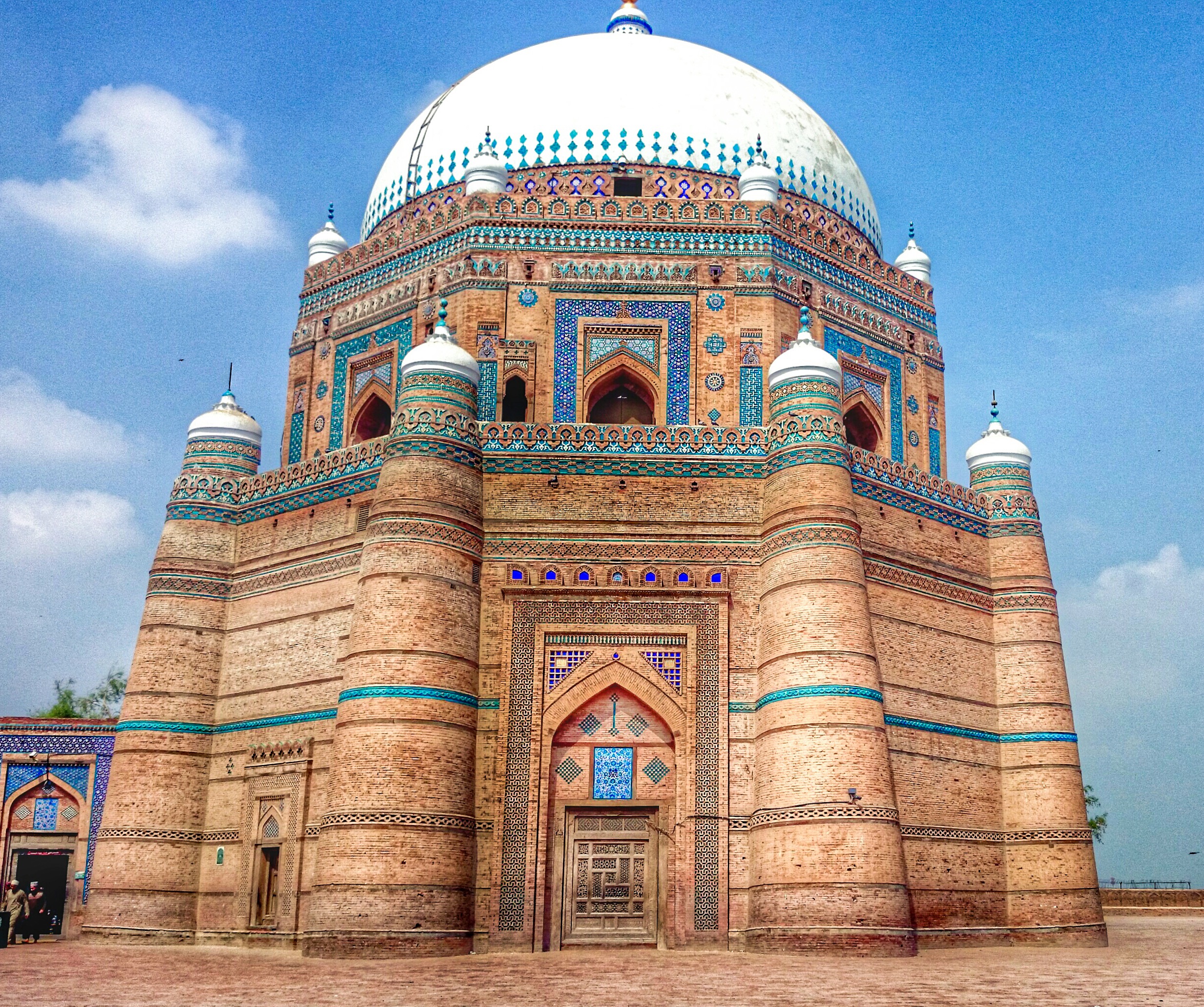
An important example of Tughluq-period funerary architecture is the Mausoleum-Shrine of Rukn-i-Alam in Multan, Pakistan (1320–24). This structure features:
Octagonal plan with battered (inward-sloping) walls and prominent use of glazed tilework.
A massive white dome rising nearly 18 meters high.
Red-brick masonry enriched with blue and white glazed tiles that enhance visual contrast and spiritual symbolism.
The mausoleum exemplifies both regional craftsmanship and the integration of Islamic forms with local materials and aesthetics. Restoration efforts in the 20th century involved training local artisans and earned an Aga Khan Award in 1983.
Stylistic Features and Techniques
Indo-Islamic architecture is characterized by:
Geometric and floral decoration in stone, plaster, and glazed tile.
Calligraphic inscriptions, often quoting verses from the Qur’an, as both spiritual content and ornamental device.
Domes, arches, and minarets, which became defining features of mosques and tombs.
Material adaptation, using red sandstone, white marble, and decorative tilework depending on regional availability.
Later Developments and Synthesis
By the late Delhi Sultanate period, architectural innovation slowed due to political instability. However, the groundwork had been laid for the Mughal renaissance that followed. The Mughals synthesized Persian, Timurid, and Indian styles, resulting in monumental achievements such as Humayun’s Tomb and the Taj Mahal.
Indo-Islamic art and architecture, therefore, represents not merely an import of Islamic styles into India but a dynamic and regionally rooted tradition. It exemplifies the ability of Islamic art to adapt, absorb, and evolve in response to local cultures while maintaining core religious and symbolic values.